My cameras

Here I'd like to give you an insight into my camera collection. This page will be updated periodically. For each camera, there's a short personal review from me, a description of what I prefer to use the camera for, and a few sample photos.
Lomo Apparat (Paris Edition)

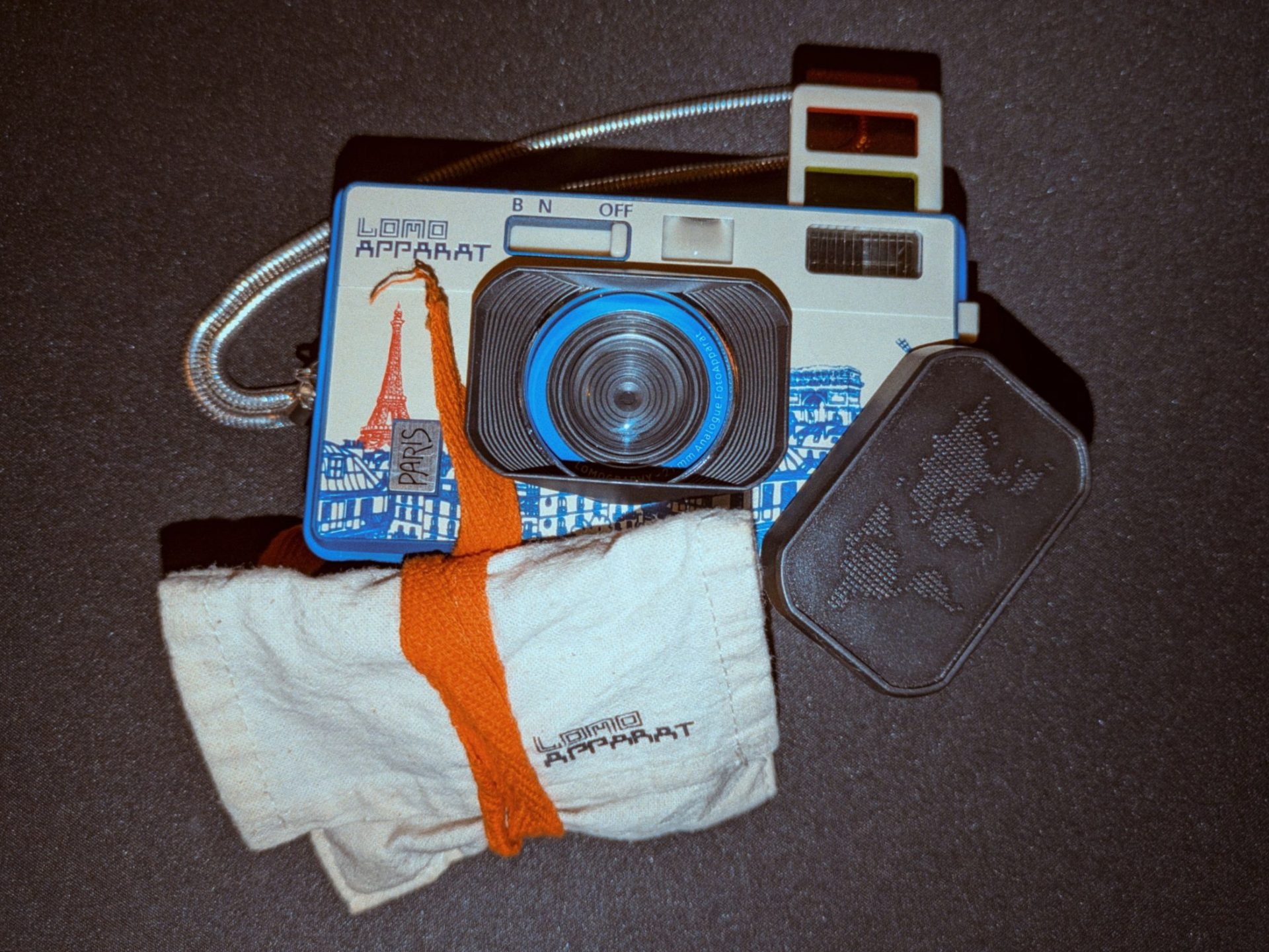
My first 35mm camera from Lomography. A purist model without automatic exposure, featuring an integrated flash, prism and close-up lens, and a splitzer, which was broken on my camera and therefore I unfortunately never got to try it out.
This camera is a fantastic all-rounder that practically begs to be experimented with. The 1/100 shutter speed is fast enough for almost any situation, and the focus range from 0.5m to infinity, combined with the 21mm focal length, is the ultimate invitation for hip-fire shooting. And if you don't mind the built-in flash always being on by default (you can, of course, deactivate it), it's practically impossible to take a bad snapshot. So if you want to shoot away without a care in the world, the Apparat is perfect for you.
TIP: If you haven't yet dealt with the topic of the exposure triangle (or simply don't want to), it's best to use an ISO 400 film or a LomoChrome film with an ISO tolerance range of 100-400. For example, LomoChrome Metropolis. Then nothing can really go wrong – I promise.
My areas of application
I use this camera for both indoor and outdoor photos. Whenever I want that truly "dirty" Lomography look and feel, it's my first choice. I'm not exaggerating when I say I almost never look through the viewfinder with this Lomo camera. It gives me exactly the freedom that Lomography promises – shooting from the hip, without thinking. Indoors or at night, the camera needs the flash (it's great that it's always included) or, alternatively, the bulb mode. If that's bothersome or unsuitable, it might be a disadvantage.
Sample shots
Link
Lomo LC-Wide

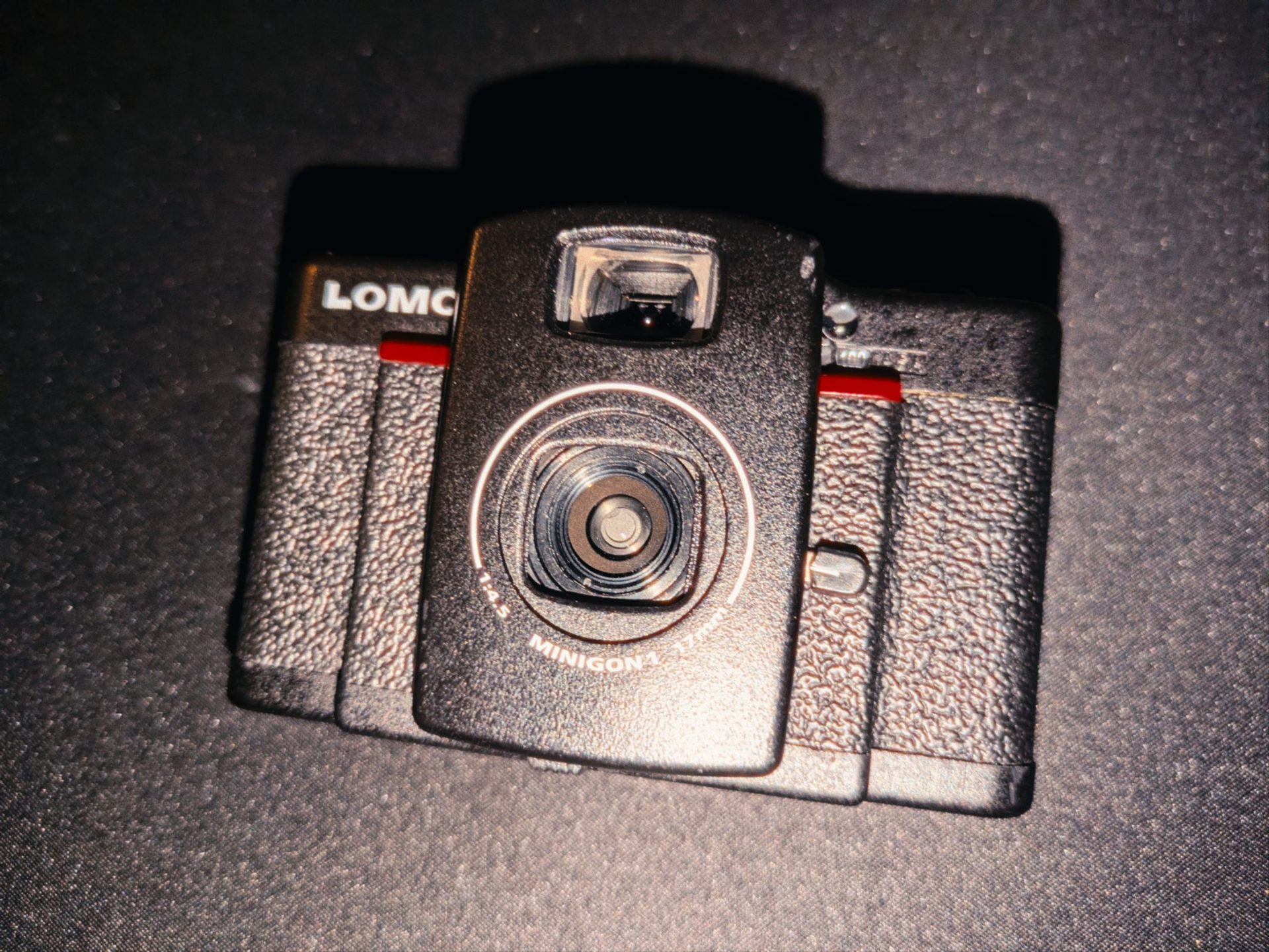
A piece of Lomography history! The LC-Wide is a further development of the Lomo LC-A, which in turn was a Russian copy of the Cosina CX-2. The LC cameras are considered the classics among Lomo cameras. They essentially launched the Lomography movement. You can find more information in the link below.
This compact gem features automatic exposure, dual-zone focusing (0.4-0.9 and 0.9-infinity), selectable ISO settings of 100, 200, 400, 800, and 1600, and the ability to shoot half-frame and square format photos (with the appropriate insert frames – switching formats mid-shot is not possible). All this, combined with a 17mm focal length, provides the basis for some truly spectacular shots.
My areas of application
I use the LC-Wide for pretty much everything. Since this camera handles almost everything automatically (except for focus), it's the perfect point-and-shoot for me. The only downside I find is the lack of a built-in flash in low light. I simply don't like the hassle of attaching a flash to the hot shoe and running around with it.
GOOD TO KNOW: If you like to use flash photography in low-light conditions, it's interesting to know that the flash fires on the second curtain when the shutter button is held down. If you don't hold the shutter button down long enough for the flash to fire automatically, it will fire the moment you release it. I think that's a rather elegant solution.
The Bulb mode, by the way, is a relative term. Strictly speaking, the LC-Wide doesn't have a Bulb mode in the classic sense, even though the product page states otherwise. Here's how it works: If there's insufficient light, two red LEDs illuminate in the viewfinder. If you then press and hold the shutter release (this is important!), the shutter remains open until enough light has been captured for proper exposure. You'll hear the second click as the shutter closes. If you release the shutter release before this happens, the photo will likely be underexposed. It's essentially an automatic Bulb mode, since you have no control over the maximum exposure time. This can be seen as either an advantage or a disadvantage.
TIP: A cool effect is achieved by taking half-frame photos with the camera without the half-frame frame inserted. The images will then overlap by about a quarter. See example photos.
Sample shots
Link
It will continue soon...
i am working on it :-)